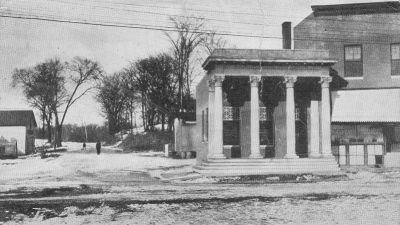
Lake Street and Barry Avenue: Historical Crossroads
The corner of Lake Street and Barry Avenue is a busy one, especially during the summer months.
It serves as the gateway to the historic railroad depot and the Wayzata Beach. That’s also how you get to two of Wayzata’s many fantastic restaurants.
Much has changed through the years at the corner of Lake and Barry – particularly the businesses that occupied that part of Wayzata.
According to the Lake Minnetonka Historical Society records, the Wayzata State Bank opened for business in 1909 on the northeast corner of Lake and Barry. It was the first financial institution on Lake Minnetonka that focused exclusively on banking. The building was torn down a few years ago. A new building stands in its place with a replica bank façade. The original bank continued operation in this structure until 1950 when operations were moved slightly to the east, but still on Lake Street.
Next to the original bank location - a building built in 1910 by Harry Pettit. It housed the Pettit & Kysor grocery store. Wayzata residents could purchase food from that building until 1974, under its more recent name Waytonka Market. The store prided itself on home deliveries and was famous for its bakery goods and homemade ice cream.
Next door, Rettinger Motor Company opened for business on Lake Street in the early 1920s. The business sold Model Ts in the early days. Unfortunately, in December of 1949, a fire destroyed the building. According to local newspaper accounts, damage was estimated up to $75,000 – around $750,000 in today’s dollars.
In 1927, Dr. Carl J. Martinson opened his business on Lake Street just west of Barry Avenue. Martinson converted the old Manning Drug Store into his medical offices. Martinson and Edward E. Mitchell of Mound founded the Minnetonka Hospital in 1928. The Martinson name continues to be a big part of Wayzata today – his grandson, Dr. Bruce Martinson operates a dental clinic in town.
On the northwest corner of Lake and Barry stood Wayzata Pharmacy, a.k.a. “The Old Drug”. It was run by Bob and Ruth Connelly. It later became Ted’s Drug and most recently carried the name of Candlelight Floral – a business that has served Wayzata since the late 1960s. The florist business no moved. Wayzata Blu condominiums stands at that corner now.
Image courtesy of the Lake Minnetonka Historical Society
Lake Street and Barry Avenue: Historical Crossroads
The corner of Lake Street and Barry Avenue is a busy one, especially during the summer months.
It serves as the gateway to the historic railroad depot and the Wayzata Beach. That’s also how you get to two of Wayzata’s many fantastic restaurants.
Much has changed through the years at the corner of Lake and Barry – particularly the businesses that occupied that part of Wayzata.
According to the Lake Minnetonka Historical Society records, the Wayzata State Bank opened for business in 1909 on the northeast corner of Lake and Barry. It was the first financial institution on Lake Minnetonka that focused exclusively on banking. The building was torn down a few years ago. A new building stands in its place with a replica bank façade. The original bank continued operation in this structure until 1950 when operations were moved slightly to the east, but still on Lake Street.
Next to the original bank location - a building built in 1910 by Harry Pettit. It housed the Pettit & Kysor grocery store. Wayzata residents could purchase food from that building until 1974, under its more recent name Waytonka Market. The store prided itself on home deliveries and was famous for its bakery goods and homemade ice cream.
Next door, Rettinger Motor Company opened for business on Lake Street in the early 1920s. The business sold Model Ts in the early days. Unfortunately, in December of 1949, a fire destroyed the building. According to local newspaper accounts, damage was estimated up to $75,000 – around $750,000 in today’s dollars.
In 1927, Dr. Carl J. Martinson opened his business on Lake Street just west of Barry Avenue. Martinson converted the old Manning Drug Store into his medical offices. Martinson and Edward E. Mitchell of Mound founded the Minnetonka Hospital in 1928. The Martinson name continues to be a big part of Wayzata today – his grandson, Dr. Bruce Martinson operates a dental clinic in town.
On the northwest corner of Lake and Barry stood Wayzata Pharmacy, a.k.a. “The Old Drug”. It was run by Bob and Ruth Connelly. It later became Ted’s Drug and most recently carried the name of Candlelight Floral – a business that has served Wayzata since the late 1960s. The florist business no moved. Wayzata Blu condominiums stands at that corner now.
Image courtesy of the Lake Minnetonka Historical Society
wayzata history
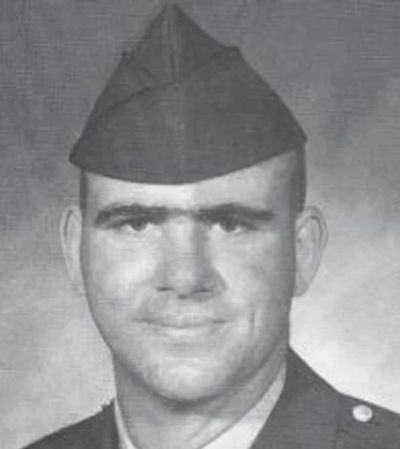
The Ultimate Sacrifice: Wayzata’s Thomas Koob
For those of you who aren’t aware, Wayzata Legion Post 118 is named after a Wayzata man who died in World War I, Ernest Aselton.
He’s one of many Wayzatans who went off to war and never returned.
One of our boys who died in Vietnam.
His name is Thomas Koob - a 1963 Wayzata High School Grad.
Tom was very active in high school - he had a terrific voice and participated in the choir.
“His next love was hockey, which he played through college,” wrote Tom’s mother Vi in a letter years after Tom died. “Tom graduated from Wayzata High School and St. Cloud State College with a degree in retail marketing.”
On June 25, 1968, Tom was sent to Fort Campbell, Kentucky. He would come home on leave in November and then it was off to Vietnam. That was the last time his family saw him alive.
Tom’s mom Vi was a second grade teacher at the time. Her students sent Tom letters and he wrote back.
“Tom was so understanding and compassionate; I told him he should consider being a youth counselor,” wrote Vi.
During a firefight, Tom attempted to reach a man who had fallen. This was March 13, 1969. Despite being driven back by artillery fire, Tom reached the man only to find him dead. As he began carrying the man back, he was fatally wounded.
Tom was awarded the Bronze Star with Oak Leaf, the Purple Heart, Good Conduct Medal, Gallantry Cross, Military Merit Medal, and National Defense Medals.
He is buried in Summit Cemetery.
“After these many years, he is still loved and missed greatly,” wrote Vi.
Thomas Koob Image Courtesy Vietnam Veterans Memorial Fund
wayzata history

Holy Trinity: Wayzata’s Hilltop Churches
If you walk along Rice Street in between Walker Avenue and Broadway Avenue you’ll notice plaque. It’s on the north side across the street from the fire department. The Lake Minnetonka Historical Society does a great job of documenting what once stood in that area. The plaque tells the story of three churches on a hill.
Congregational Church of Christ
Back in 1881, the Congregational Church of Christ (image on left courtesy Lake Minnetonka Historical Society) was built on the corner of Rice and Walker. The church building was updated with structural work in 1911. Five years later the church burned down because of faulty electrical wiring. The church was resurrected in the same location in a similar style. Fast forward to 1949 - the congregation moved into a new building on the corner of Ferndale Road and Wayzata Boulevard. It’s new name - Wayzata Community Church. The original church at Rice and Walker continued to serve. In 1953, Wayzata Evangelical Free Church moved in. Later, in 1965, the Unitarian Universalist Church of Minnetonka used the space. The building now is home to Blue Water Theatre Company.
St. Bartholomew’s Catholic Church
On Christmas Day, 1916, St. Bartholomew’s Catholic Church was erected on the corner of Broadway and Wayzata Boulevard. It was a modest structure that seated 60 people. It was named for its founding pastor Rev. George Bartholomew Scheffold. Over the years, St. Bart’s made additions like a new rectory (1942) and a one-story school and convent (1955). A second story school addition was added in 1959 to serve elementary grades. The church expanded in 1989 to connect to the school and in 2007, it was enlarged and remodeled.
Redeemer Lutheran Church
Redeemer Lutheran Church came along in 1938. But by the early 1950s, it outgrew its growing congregation. The original church property at Rice and Broadway was sold to St. Bart’s to support its expansion. Redeemer built a new facility on the corner of Ferndale Road and Wayzata Boulevard across the street from Wayzata Community Church. Once again, they were neighbors! Back to that original structure built in 1938. It was actually sold and moved to the city of Crystal where it became the community’s first Lutheran church.
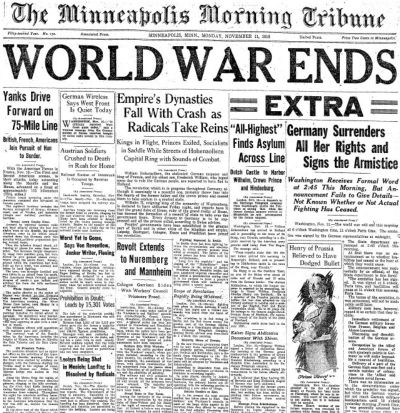
Armistice Day: More Than A Century Later
November 11, 1918 would turn out to be an extraordinary day for the more than 500 residents of Wayzata. It was a dry day with temperatures in the mid-50s, more than 10 degrees higher than normal. Perhaps a last hurrah of fall before the cold set in. In fact, exactly a week later, according to Minnesota DNR statistics, the bottom fell out with high temperatures plunging into the 30s.
But this extraordinary day offered its crowning moment while the town slept, several hours before sunrise. At 4 a.m. local time World War I officially ended. During the "eleventh hour of the eleventh day of the eleventh month", Germany and the Allies signed a peace agreement in France. In a time when radios where not common household appliances, the front page of daily newspapers delivered the joyful news to the town.
Minnesotans throughout the state celebrated in the streets of towns small and big. Minneapolis was home to one of the largest impromptu celebrations. People could be seen on the streets shoulder-to-shoulder while others cheered from windows in buildings above. The boys overseas would soon be coming home. Well, some of them would. Unfortunately, many of the local boys who served in World War I would not set foot in Wayzata again.
Within the pages of the 1918 Wayzata yearbook, there was mention of one young man in the History of the Class of 1918 section of the annual:
“One of our boys, Ernest Aselton, heard the call of his country answered it by enlisting in the Marine Corps.”
Aselton joined the Marine Corps in August of 1918 and was killed in action in France two months later.
The local men who served overseas formed deep bonds with other servicemembers in Europe. They sought that type of comradery when they got back home. Less than a year after the Great War ended, the Wayzata Legion was granted its charter on September 3, 1919. The founding members had familiar Wayzata names like Quay, Manning, Getten, Frost and Kysor. Arthur H. Quay was the first Commander. Post 118 was named in honor of Aselton. The first national Legion convention was held in Minneapolis in November.
History repeated itself in 1939 when Europe was once again thrust into another war, World War II. And because of this, the Great War, the war to end all wars, was simply known as World War I. Similarly, the name Armistice Day, which celebrated the end of World War I, was changed in the United States to Veterans Day in the mid-50s. Since then, it has been a day to honor those who served the U.S. military.
One hundred years after World War I ended, November 11 still has significance in our community. It serves as a reminder of how far we’ve come over the course of a century. From the days when news was delivered in black and white to now when it’s consumed by swiping a smart phone. More importantly, it is an opportunity to thank those who serve our country.
Will the weather this Veterans Day be an unseasonably warm one like in 1918 or will we already have one step in winter’s chilly door? We will learn the answer to that question soon enough.
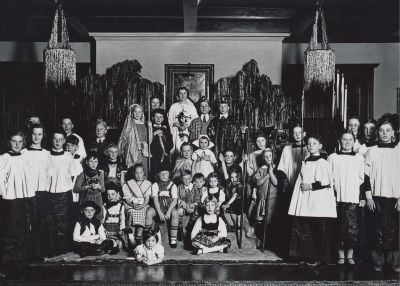
Holiday Tradition: Christmas Eve at Highcroft
Christmas Eve 1935 was a chilly one. The high temperature in Wayzata was only in the single digits and there was about half a foot of snow on the ground. Several years before Bing Crosby’s song was a staple on radio airways, folks in Wayzata in 1935 didn’t have to dream of a White Christmas, as it was a reality, a cold one at that.
That night, brave parents and children ventured out into the frigid air to the annual Christmas Pageant at Highcroft Manor in the Ferndale neighborhood. The majestic Lake Minnetonka home was built in 1895 by F.H. Peavey and it hosted an elaborate holiday celebration.
The first production was a nativity play organized by Mary Heffelfinger Morrison whose father, Frank Heffelfinger, lived at Highcroft. She teamed up with Cuthbert Munns, a man in charge of the estate’s farm to make the night truly special.
That first play featured grandchildren and neighborhood kids as the performers.
In 1983, Morrison spoke at a Wayzata Historical Society event at Wayzata Community Church. She reminisced about the Highcroft Christmas celebration, recalling how 20-30 children donned choir robes and came down the grand staircase singing to the audience.
The large Highcroft estate was a perfect place for the annual celebration. The Great Hall was 60 feet in length and had fireplaces on either end.
The 1940 event was called Why The Chimes Rang, Christmas Eve at Highcroft. The printed program listed the names of the performing children, the five scenes and a list of the Christmas songs sung. The program also included the names of the pianists as well as those responsible for the costumes and lighting.
After the pageant concluded, a giant yule log was carried in by four men and lit in one of the ornate fireplaces. After that, it was all about Santa Claus. He was played by local Wayzatan Dick Wakefield. Instead of coming down the fireplace, he made his way down the staircase, bringing gifts for all the kids. After unwrapping gifts, everyone gathered in the dining room for refreshments.
It was clear by those who attended and spoke at the 1983 event how much the Highcroft Christmas meant to them. Those who spoke remembered the generosity of the people who opened their home every year to the community providing entertainment and gifts.
The Highcroft Christmas took a hiatus during World War II. It was revived in 1947 when Mr. Heffelfinger’s grandchildren convinced him to host the celebration again.
Highcroft met the wrecking ball in 1953.
Andy Williams sings a line in the song Happy Holidays about “tales of the glories of Christmases long, long ago.” That’s what the Highcroft Christmas was.
This was a time when Wayzata residents knew their neighbors. A time when they spent holidays together.
What Highcroft did was bring the community together if only for one night. And on that cold 1935 Christmas Eve, as those who gathered at Highcroft put on their coats and hats and made their way back into the wintry air, their hearts were warm.
wayzata history
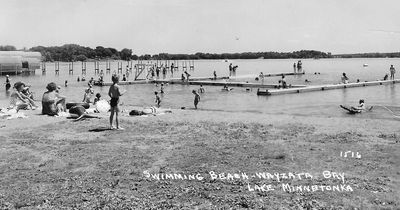
Wayzata Beach
In the early 1920s the Village of Wayzata purchased the land now known as Shaver Park for $6,000. The lagoon nearest the lakeshore was dredged. In 1926, Wayzata’s first mayor Rufus Rand, donated funds for a new municipal bathhouse and beach. Soon after, Wayzata acquired the land including the north lagoon. Around that time, the Wayzata Businessman’s Association collected $2,400 for a new walking bridge between the lagoons. This early development is what shaped the summer fun we still enjoy today.
Lifeguards were hired in 1929 and the American Legion provided a boat and oars in addition to life saving equipment consisting of several life jackets, ropes and lifesaving rings. A diving board was later installed on a raft just off the shore.
While the 20s were roaring, so were the motorboats on Lake Minnetonka. Motorboat racing was a big deal and thousands of people would pack the Wayzata waterfront to watch the racing boats. Many of those boats were made by local boat builders Moore, Wise and Swaggert. By 1925, Ramaley Boats called Wayzata home.
The flood of folks created a business opportunity – the selling of food along the waterfront. In 1935, Bill Prinz was awarded the concession stand at the beach. You can still grab a bite to eat today along the sandy shore at McCormick’s Beachside.
If you were a baby boomer raised in Wayzata, you likely took swimming lessons at the “H” docks off Wayzata beach. The beach was the place to be in the summer for area youth. Charles “Chuck” Shoen’s 2004 book History of Wayzata captures what the beach meant to the younger generation during the 40s, 50s and beyond:
“The Wayzata beach was the summer gathering spot for all youth in the school district, and a place to renew friendships with kids who were in private schools. Busses would bring kids from outlying parts of the school district and many a parent would come to town to shop before meeting their kids at the beach.”
Image courtesy Lake Minnetonka Historical Society
wayzata history
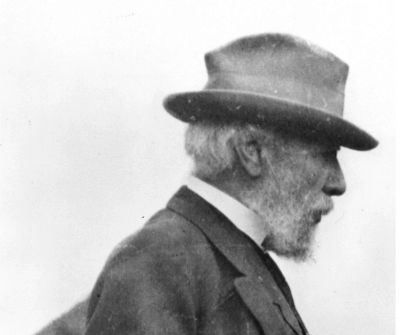
The James J. Hill & Wayzata Relationship
“The handsomest and best built structure of its kind on the Great Northern System”. That’s how James J. Hill described the newly-erected Wayzata train depot in 1906. The depot stands as a reminder of the city’s past, but also a symbol of peace between Hill and Wayzata – an olive branch offered following a tumultuous relationship.
Hill was born in 1838 in Ontario, Canada. At the age of 18, he left his country settling in St. Paul. In 1866, he became an agent for the St. Paul Pacific Railroad Company. One year later, the railroad arrived in Wayzata. The tracks were laid by St. Paul Pacific.
1873 was a pivotal year for Hill. A financial panic gripped the country and crippled both St. Paul Pacific and Northern Pacific. Both went bankrupt and Hill saw an opportunity. He and two other investors would later purchase St. Paul Pacific.
In the beginning, Hill’s relationship with Wayzata was troubled. Wayzata was incorporated as a village in 1883 and one of the first actions it took was to demand that the tracks of Hill’s Great Northern Railroad (previously St. Paul Pacific) the town sought to move the tracks 300 feet back from the lake. Businesses were concerned with the smoke and sparks from the engines.
This did not sit well with Hill. In retaliation, he built a depot about a mile east of town. People had to trudge through a swamp to get there. But the grudge wouldn’t last forever. Hill had a change of heart and built a Tudor-style depot complete with platform canopies, steam heat, gas lights and indoor bathrooms. Electricity would come a year later. In addition to all of the bells and whistles, the depot was much more convenient – that familiar spot near the corner of Lake Street and Barry Avenue. Hill was on hand to christen the train stop with an opening ceremony on August 5, 1906. Hill and Wayzata’s past disagreements were now water under the railroad bridge.
Image courtesy Lake Minnetonka Historical Society

Local History Lesson: The Wayzata Library
Throughout the history of the United States, there were numerous big ideas that have enduring legacies.
One that stands tall is the establishment of the National Park System that dates to the 1870s. There’s a good chance you’ve visited at least one of these parks. All are truly national treasures.
Another legacy is the free and public library system.
One of the catalysts was businessman and philanthropist Andrew Carnegie. His contributions created nearly 1,700 libraries between the 1880s and the 1920s. This forethought is alive and well here in Wayzata today.
The Wayzata library sits on top of the hill at the intersection of Broadway Avenue and Rice Street. It’s a wonderful place to visit. It has a helpful staff, a great selection of literature, and a terrific view of Lake Minnetonka while you read.
The Wayzata library has a storied history that dates to the 1890s.
Initially, the Wayzata Library and Literary Club was headquartered in the Wayzata Congregational Church building which is now the Blue Water Theatre.
In 1904, it moved into Wayzata’s first city hall on Lake Street.
More than 50 years later, disaster struck on St. Patrick’s Day 1955.
This was not a lucky day for the City of Wayzata.
The City Hall building which housed the library at the time caught fire.
Local firefighters did their best to save the structure and the books inside.
But during this awful event, the strength of the community shined.
Several dozen kids stopped to help on their way home from school.
They carried books from the library to a nearby business.
Two years later, City Hall and the library found a home on top of that hill where the current City Hall sits.
And in 2003, the facility we use today opened its doors.
Through the years there have been countless librarians that held down the fort.
Once Upon A Lake: A History of Lake Minnetonka and Its People author Thelma Jones led the library from 1949 to 1968!
She really captured what a librarian should be in a Minneapolis Star article from 1962.
“I would advise someone who is fond of dealing with people to become a librarian,” as she was quoted in the article. “Oh, books too, but people first of all.”
That’s very true today. Interact with the folks who work at the Wayzata library currently and you know they meet Jones’ criteria.
If you haven’t already, stop by the Wayzata library. It’s a terrific facility with a rich history.
Image: original library was housed in village hall built in 1904. Courtesy of the Lake Minnetonka Historical Society
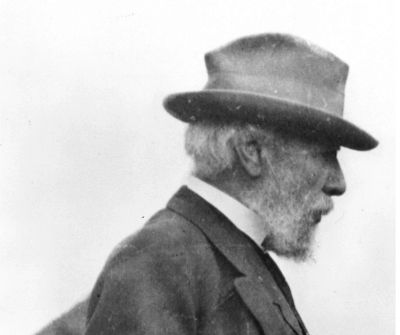
The James J. Hill & Wayzata Relationship
“The handsomest and best built structure of its kind on the Great Northern System”. That’s how James J. Hill described the newly-erected Wayzata train depot in 1906. The depot stands as a reminder of the city’s past, but also a symbol of peace between Hill and Wayzata – an olive branch offered following a tumultuous relationship.
Hill was born in 1838 in Ontario, Canada. At the age of 18, he left his country settling in St. Paul. In 1866, he became an agent for the St. Paul Pacific Railroad Company. One year later, the railroad arrived in Wayzata. The tracks were laid by St. Paul Pacific.
1873 was a pivotal year for Hill. A financial panic gripped the country and crippled both St. Paul Pacific and Northern Pacific. Both went bankrupt and Hill saw an opportunity. He and two other investors would later purchase St. Paul Pacific.
In the beginning, Hill’s relationship with Wayzata was troubled. Wayzata was incorporated as a village in 1883 and one of the first actions it took was to demand that the tracks of Hill’s Great Northern Railroad (previously St. Paul Pacific) the town sought to move the tracks 300 feet back from the lake. Businesses were concerned with the smoke and sparks from the engines.
This did not sit well with Hill. In retaliation, he built a depot about a mile east of town. People had to trudge through a swamp to get there. But the grudge wouldn’t last forever. Hill had a change of heart and built a Tudor-style depot complete with platform canopies, steam heat, gas lights and indoor bathrooms. Electricity would come a year later. In addition to all of the bells and whistles, the depot was much more convenient – that familiar spot near the corner of Lake Street and Barry Avenue. Hill was on hand to christen the train stop with an opening ceremony on August 5, 1906. Hill and Wayzata’s past disagreements were now water under the railroad bridge.
